DOMALAK-ANA MAUSOLEUM
DOMALAK-ANA MAUSOLEUM
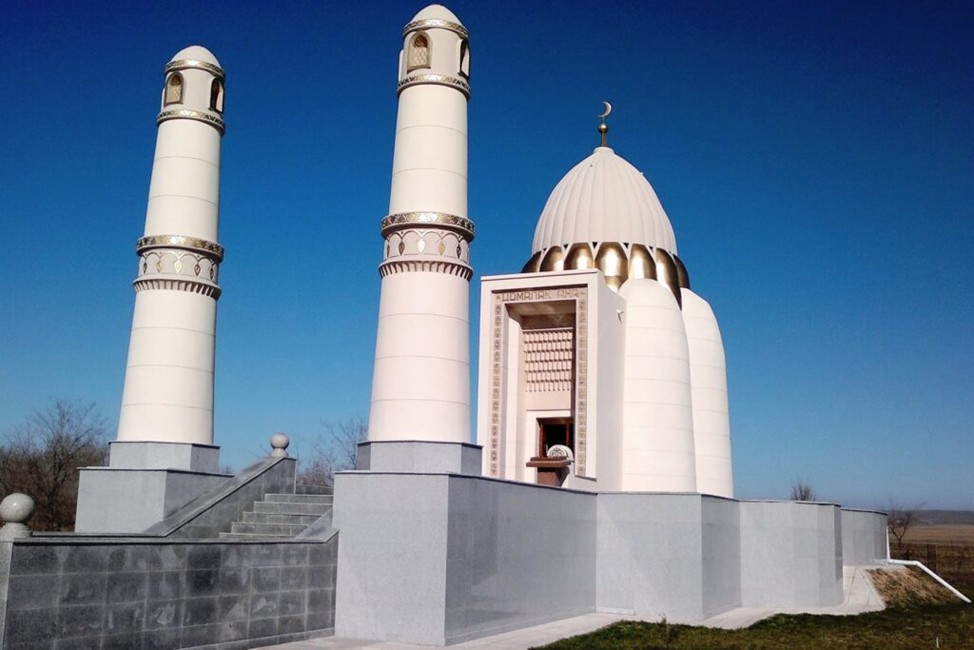
Domalak-Ana Mausoleum (Kazakh: Domalaq ana kesenesi) is an architectural monument located in the Baidibek District of the Turkestan Region of Kazakhstan. It lies 2 km south of the village of Akbastau, on the southern slope of the Karatau Mountains, in the valley of the Balabogen River. The site is included in the list of historical and cultural monuments of local significance in the Turkestan Region.
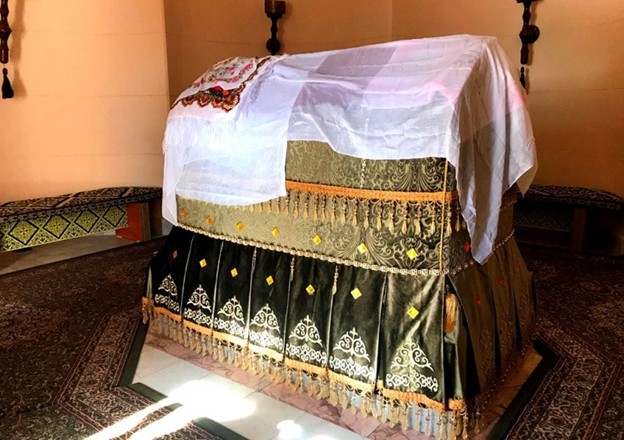
The mausoleum was built over the grave of Nurila Ali Sylankyzy, the wife of Baidibek Karashuly, who is popularly known as Domalak-Ana. It was originally constructed in 1456 as a four-walled mausoleum topped with domes. Later, it underwent several restorations. The monument erected in the early 20th century has a circular shape with six niches and a dome over the main structure. The mausoleum restored in 1957 has not survived. In 1996, it was rebuilt using white stones brought from the Mangystau Region.
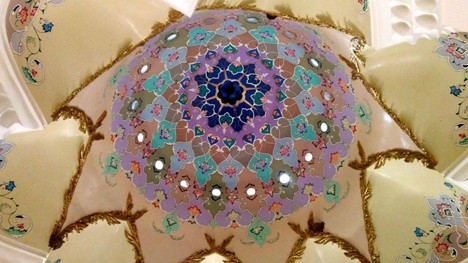
The height of the mausoleum is 12 meters, and an octagonal dome crowns the main structure. Domalak-Ana was the younger wife of Baidibek Ata, revered for her wisdom, compassion, and intelligence. She symbolizes motherhood and kindness and is often regarded as a cultural symbol of benevolence and insight. Some believe that her name derives from the Persian phrase “Dikhnat Mama,” meaning “Holy Mother,” which later evolved into “Domalak.” Numerous stories tell of her spiritual purity, sharp mind, and wise counsel – virtues that earned her respect from the very beginning of her marriage. Her guidance often helped resolve conflicts and ease long-standing grievances, earning her a reputation as a peacemaker .
Her legacy has been preserved among the peoples of Semirechye, Aulie-Ata, Shymkent, and Tashkent. Her son Zharykshak held the honorable position of advisor to the Emir of Tashkent, later becoming the ruler of Semirechye and the chief vizier of Khan Esenboga. Toward the end of her life, Domalak-Ana decided to return to her native Karatau Mountains, reportedly guided by a vision of her husband Baidibek Ata. She passed away during prayer.
The original mausoleum built in 1456 had four walls crowned with domes. Although it underwent many reconstructions, its original structure has not been preserved. The present mausoleum dates back to major renovations carried out in the late 19th and early 20th centuries. An inscription in the Kazakh language near the entrance reads: “Monument to the Great Mother Babizhar, daughter of Aksultan,” followed by verses calling for the veneration of mothers. In 1996, architect S. Toktamys carried out restoration work using white stones brought from Mangystau.
Today, the Domalak-Ana Mausoleum is one of the main attractions of the Turkestan region, drawing pilgrims and tourists alike. Local stories speak of miraculous events: families struggling to conceive would come here, pray, and later welcome children into their lives. Despite this reverence, the mausoleum staff remain vigilant in ensuring that visitors observe proper decorum. Women are expected to avoid wearing short dresses, trousers, or revealing clothing, while men are also required to dress modestly, refraining from wearing shorts or T-shirts. These strict rules do not deter visitors; on the contrary, the mausoleum has become so popular that local benefactors have built a гостиничный complex nearby where guests can stay .
Historical places
Our native land is full of history !
MAUSOLEUM OF ARYSTAN BAB
TurkestanIn 1376, following the transfer of Otrar under the authority of Amir Timur, the mausoleum of Arystan Bab was constructed by his order. Arystan Bab occupies a special place in th...
MAUSOLEUM OF KHOJA AHMED YASAWI
TurkestanThe Mausoleum of Khoja Ahmed Yasawi is a famous medieval monument in Central Asia. During the Soviet period, it was revered as a “second Hajj.” It is included in the UNESCO...
MAUSOLEUM OF RABIA SULTAN BEGIM
TurkestanThe Mausoleum of Rabia Sultan Begim is a 15th-century architectural monument located in Turkestan. Rabia Sultan Begim was the daughter of the great scholar-astronomer and ruler...
GAUKHAR ANA – A HOLY MOTHER AND A HEALING SOURCE OF FAITH
TurkestanIn southern Kazakhstan, not far from Turkestan, lies the mausoleum of Gaukhar Ana –the daughter of the great Sufi master Khoja Ahmed Yasawi. Gifted with healing abilities, sh...
THE BABA-ATA MOSQUE-MAUSOLEUM
TurkestanThe Baba-Ata mosque-mausoleum (Kazakh: Baba ata meshit-kesenesi) is an architectural monument located in the village of Babaata in the Suzak District of the Turkestan Region, o...
DOMALAK-ANA MAUSOLEUM
TurkestanDomalak-Ana Mausoleum (Kazakh: Domalaq ana kesenesi) is an architectural monument located in the Baidibek District of the Turkestan Region of Kazakhstan. It lies 2 km south of ...
IBRAHIM ATA
TurkestanThe Ibrahim Ata Mausoleum is an architectural monument located in the South Kazakhstan region. It stands on the outskirts of the northwestern part of the village of Sairam, on a...
KARASHASH-ANA MAUSOLEUM
Turkestanp class="text_indent">In the ancient village of Sayram, which today is a neighborhood in the eastern part of Shymkent, stands one of the most revered monuments of South Kazakhstan – the Mausoleum of...