MAUSOLEUM OF ARYSTAN BAB
MAUSOLEUM OF ARYSTAN BAB
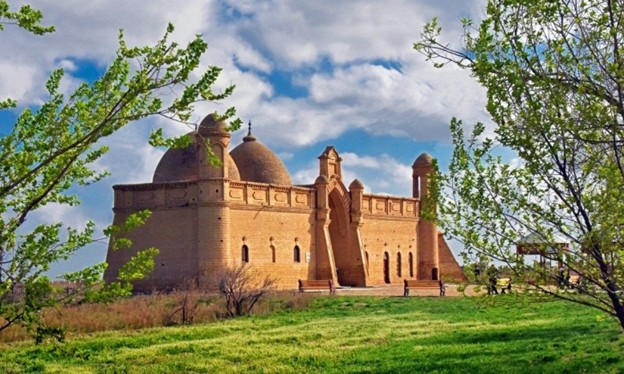
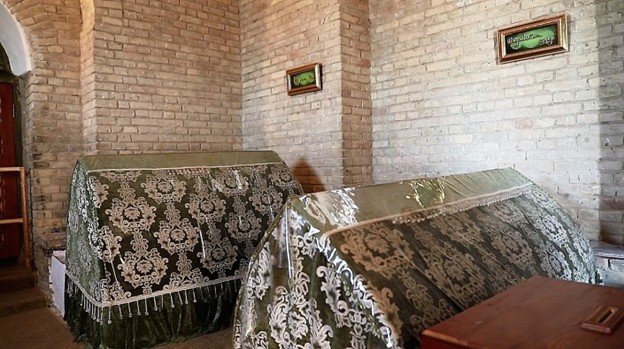
In 1376, following the transfer of Otrar under the authority of Amir Timur, the mausoleum of Arystan Bab was constructed by his order. Arystan Bab occupies a special place in the spiritual and cultural history of the Turkic peoples as the teacher and spiritual mentor of the famous saint Khoja Ahmed Yasawi. Information about Arystan Bab is found in the “Hikmats” of Khoja Ahmed Yasawi, as well as in 15th–16th century written sources such as Rashahat ‘ayn al-Hayat and Risala of Sadr ad-Din Shaykh. According to some sources, Arystan Bab’s name was Abdurahman Bab, and he was a descendant of Imam Muhammad Hanafi. According to Islamic scholar A. Muminov and Musokhoja Isokhoja ogli, Arystan Bab descended from the lineage of Ishaq Bab and was a cousin of Khoja Ahmed Yasawi, the son of Ilyas Shaykh.
The word “Bab” in the name Arystan Bab is of Arabic origin and in Turkic languages means “door” or “gate.” In Sufi teachings, the term “door–gate” added to the names of great Sufis became associated with specific regions and later came to refer to entrance gates or boundary structures. In the names of saints, “Bab” emerged due to the spread of Islam in their regions. Religious rituals became associated with them, and they became advisers in both spiritual and worldly matters. Natural features such as mountains, rivers, and events were named after them.
The history of the construction of the mausoleum is reflected in legends related to the mausoleums of Khoja Ahmed Yasawi and Zangi Ata. In particular, during the construction of the Yasawi mausoleum, a massive bull is said to have destroyed the foundation repeatedly. Later, a luminous figure appeared in Amir Timur’s dream and advised him to first build a mausoleum in honor of the spiritual mentor of Khoja Ahmed Yasawi.
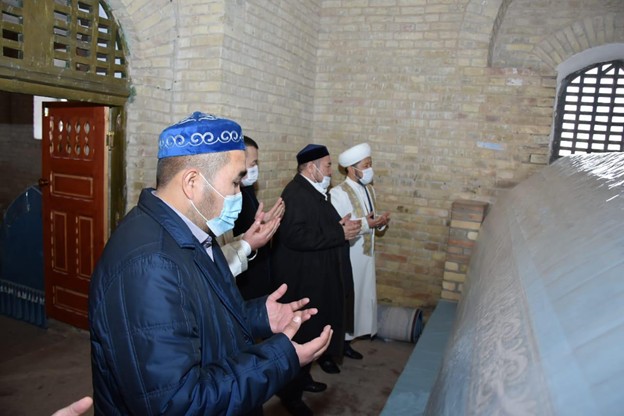
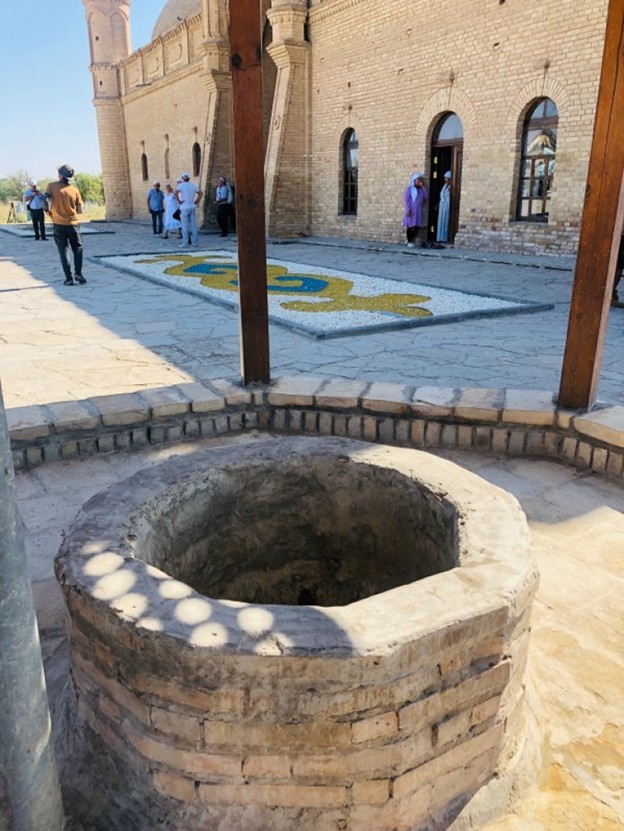
Near the mausoleum there is a well with salty water. According to popular belief, it is considered healing for gastrointestinal diseases and is revered as a “sacred well.” Pilgrims drink from it and wash their faces with its water. However, its healing properties are not scientifically proven. Nevertheless, the tradition continues as part of pilgrimage rituals passed down through generations. The site is especially crowded in March–May and September–November. According to the Kazakh proverb, “Spend the night at Arystan Bab and ask from Hazrat Sultan,” pilgrims visiting Turkestan first come to Arystan Bab and then proceed to the mausoleum of Khoja Ahmed Yasawi. This tradition is deeply rooted, and even local residents at the border advise beginning the pilgrimage from Arystan Bab.
Historical places
Our native land is full of history !
MAUSOLEUM OF ARYSTAN BAB
TurkestanIn 1376, following the transfer of Otrar under the authority of Amir Timur, the mausoleum of Arystan Bab was constructed by his order. Arystan Bab occupies a special place in th...
MAUSOLEUM OF KHOJA AHMED YASAWI
TurkestanThe Mausoleum of Khoja Ahmed Yasawi is a famous medieval monument in Central Asia. During the Soviet period, it was revered as a “second Hajj.” It is included in the UNESCO...
MAUSOLEUM OF RABIA SULTAN BEGIM
TurkestanThe Mausoleum of Rabia Sultan Begim is a 15th-century architectural monument located in Turkestan. Rabia Sultan Begim was the daughter of the great scholar-astronomer and ruler...
GAUKHAR ANA – A HOLY MOTHER AND A HEALING SOURCE OF FAITH
TurkestanIn southern Kazakhstan, not far from Turkestan, lies the mausoleum of Gaukhar Ana –the daughter of the great Sufi master Khoja Ahmed Yasawi. Gifted with healing abilities, sh...
THE BABA-ATA MOSQUE-MAUSOLEUM
TurkestanThe Baba-Ata mosque-mausoleum (Kazakh: Baba ata meshit-kesenesi) is an architectural monument located in the village of Babaata in the Suzak District of the Turkestan Region, o...
DOMALAK-ANA MAUSOLEUM
TurkestanDomalak-Ana Mausoleum (Kazakh: Domalaq ana kesenesi) is an architectural monument located in the Baidibek District of the Turkestan Region of Kazakhstan. It lies 2 km south of ...
IBRAHIM ATA
TurkestanThe Ibrahim Ata Mausoleum is an architectural monument located in the South Kazakhstan region. It stands on the outskirts of the northwestern part of the village of Sairam, on a...
KARASHASH-ANA MAUSOLEUM
Turkestanp class="text_indent">In the ancient village of Sayram, which today is a neighborhood in the eastern part of Shymkent, stands one of the most revered monuments of South Kazakhstan – the Mausoleum of...